一、Deployment、ReplicaSet 和 Pod 的区别与联系
- Pod 资源:Pod 是 Kubernetes 集群内部部署的最基本的单位,是一组容器逻辑上的集合。
- ReplicaSet 资源:ReplicaSet 资源是官方用于替换 ReplicationController 资源,ReplicationController 用来确保工作负载 Pod 的副本数始终保持与期望值相同,会自动创建新的 Pod 实例或销毁多余实例来对齐工作负载期望副本数。具体由 kube-controller 进程中 ReplicaSet Controller 协程管理(pkg/controller/replicaset)。
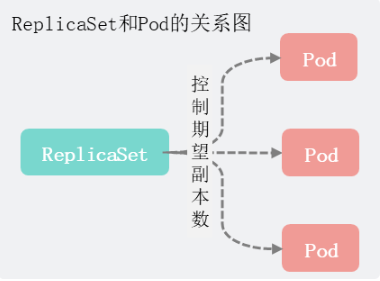
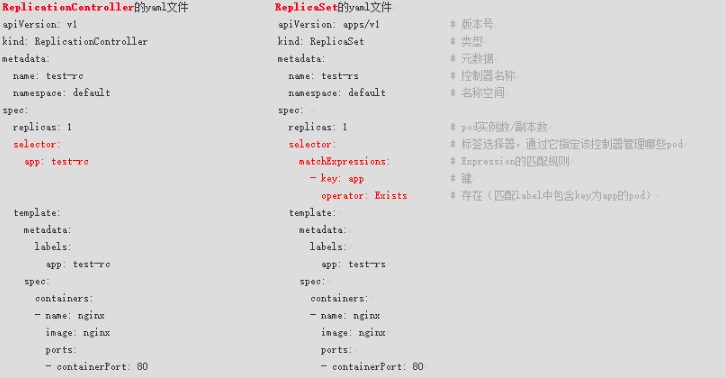
ReplicaSet 跟 ReplicationController 没有本质的不同,只是 ReplicaSet 控制器在标签选择器上支持集合式 selector,除了可以定义键值对的选择形式,还支持 matchExpressions 字段,可以提供多种选择,如:In、NotIn、Exists、DoesNotExist 操作字符等。ReplicaSet(RS)与 ReplicationController(RC)资源,都是通过标签选择器 selector 来匹配 Pod 的标签,由对应的 controller 管理被匹配到的 Pod 的,ReplicationController 和 ReplicaSet 的 yaml 文件对比如下:
- Deployment 资源:虽然 ReplicaSet 控制器已经能够管理 Pod 的副本数量了,但是为了更好的解决应用升级、回滚问题,Kubernetes 引入了 Deployment 控制器。Deployment 控制器并不直接管理 Pod,而是通过管理 ReplicaSet 来间接管理 Pod,即:Deployment 管理 ReplicaSet,ReplicaSet 管理 Pod。
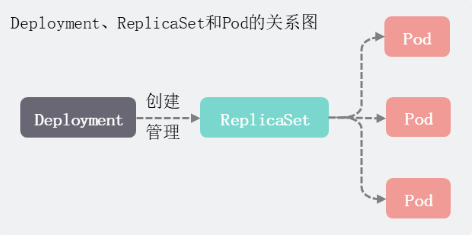
Deployment 的主要功能如下:
- 确保当前集群中 Deployment 工作负载有且只有 N 个 Pod 实例。
- 通过调整属性值 replicas 实现工作负载副本实例的伸缩。
- 通过更改模板中镜像名称来控制业务 Pod 实例的(重建/滚动)升级和回退。
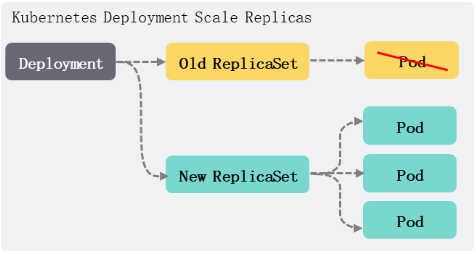
二、Deployment 创建流程图
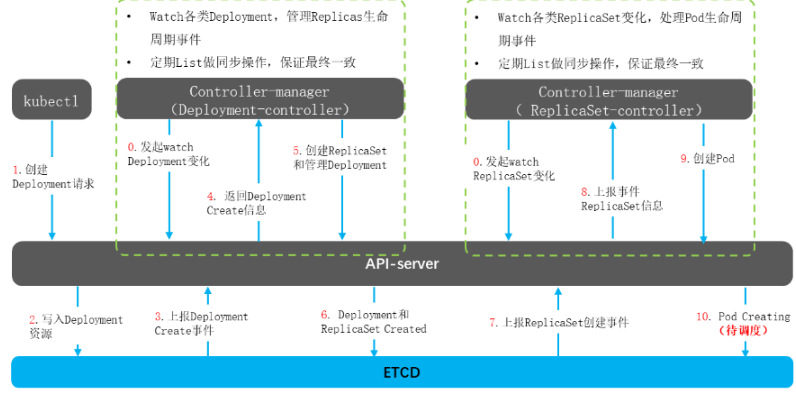
集群内(除 kube-apiserver 外)其他组件不直接参与与 etcd 通信,都是与 kube-apiserver 直接通信,Kubernetes 集群内各组件与 kube-apiserver 通信方式采用 List-watch 机制实现,其中采用 List 定期做全量同步更新,而 watch 机制采用非阻塞式长连接方式与 kube-apiserver 保持通信,具体流程如下:
- 用户通过 kubectl 客户端发起创建 Deployment 资源对象请求至 kube-apiserver。
- kube-apiserver 对请求用户鉴权、准入控制操作,然后将该请求资源事件写入到 etcd 存储中。
- 考虑到 Deployment-controller 采用非阻塞式长连接 watch 机制实时获取 Deployment 资源对象信息,一旦集群中有 Deployment 变化(包括创建、更新、删除),则通过 kube-apiserver 获取 etcd 中相关 Deployment 资源对象。
- kube-apiserver 将 Deployment 资源信息返回给 Deployment-controller 的 watch 接口长连接。
- Deployment-controller 维护 Deployment 的生命周期,控制生成 ReplicaSet 资源对象,将 ReplicaSet 创建事件信息返回 kube-apiserver。
- kube-apiserver 接收到 Deployment-controller 返回的创建 ReplicaSet 事件信息后,然后将创建请求事件写入到 etcd 存储中。
- 考虑到 ReplicaSet-controller 采用非阻塞式长连接 watch 机制实时获取 ReplicaSet 资源对象信息,一旦集群中有 ReplicaSet 变化(包括创建、更新、删除),则通过 kube-apiserver 获取 etcd 中相关 ReplicaSet 资源对象。
- kube-apiserver 将相关 ReplicaSet 资源信息返回给 ReplicaSet-controller 的 watch 接口长连接。
- ReplicaSet-controller 通过获取的 ReplicaSet 资源信息生成对应的 Pod 资源对象模板,并将 Pod 创建信息通过调用 kube-apiserver 写入 etcd。
- kube-apiserver 将待调度 Pod 创建事件信息写入到 etcd 做持久化存储。
三、更新 Deployment
Deployment 目前存在两种升级模式:销毁重建(Recreate)和滚动升级(RollingUpdate)。
3.1 Deployment 销毁重建方式升级示意图
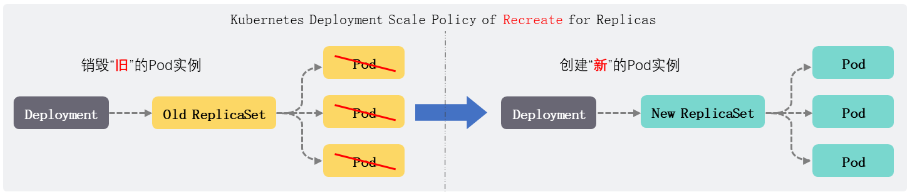
- 获取 Deployment 的所有 ReplicaSet(包括旧的和新的)并同步它们的版本号。
- 缩小旧 ReplicaSet 的规模。
- 检查是否有旧的 Pod 仍在运行,如果有则等待它们停止运行。
- 如果需要创建新的 ReplicaSet,则创建它并扩大它的规模,使其等于 Deployment 中指定的副本数。
- 清理旧的 ReplicaSet。
- 更新 Deployment 的状态。
3.2 Deployment 平滑滚动方式升级示意图
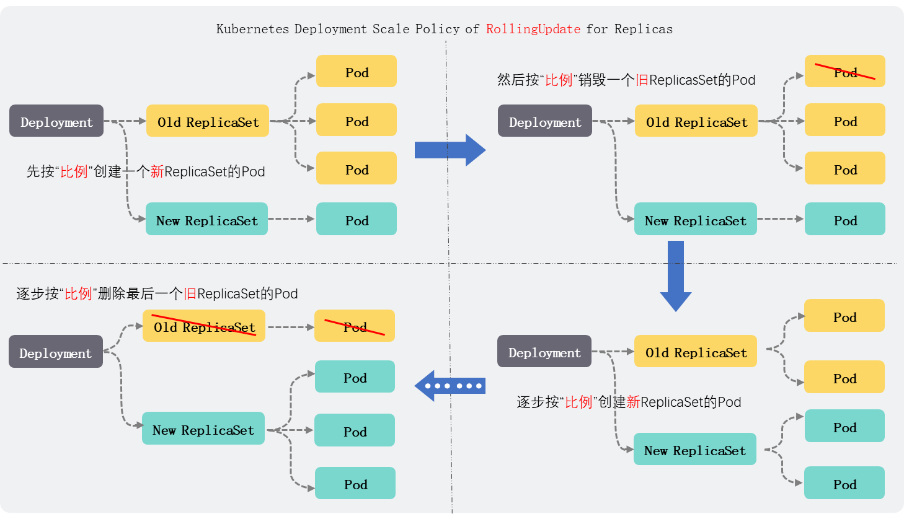
以下部分引用开源 Kubernetes 源码部分讲解流程:
通过 getAllReplicaSetsAndSyncRevision 函数 方法获取 Deployment 的所有 ReplicaSet,包括新的 ReplicaSet 和旧的 ReplicaSet。
1
2
3
4
5
6
7
8
func (dc *DeploymentController) getAllReplicaSetsAndSyncRevision(ctx context.Context, d *apps.Deployment, rsList []*apps.ReplicaSet, createIfNotExisted bool) (*apps.ReplicaSet, []*apps.ReplicaSet, error) {
_, allOldRSs := deploymentutil.FindOldReplicaSets(d, rsList)
newRS, err := dc.getNewReplicaSet(ctx, d, rsList, allOldRSs, createIfNotExisted)
if err != nil {
return nil, nil, err
}
return newRS, allOldRSs, nil
}调用 reconcileNewReplicaSet 方法尝试增加新的 ReplicaSet 的副本数,如果成功增加,则更新 Deployment 的状态。
1
2
3
4
5
6
7
8
9
10
11
12
13
14
15
func (dc *DeploymentController) reconcileNewReplicaSet(ctx context.Context, allRSs []*apps.ReplicaSet, newRS *apps.ReplicaSet, deployment *apps.Deployment) (bool, error) {
if *(newRS.Spec.Replicas) == *(deployment.Spec.Replicas) {
return false, nil
}
if *(newRS.Spec.Replicas) > *(deployment.Spec.Replicas) {
scaled, _, err := dc.scaleReplicaSetAndRecordEvent(ctx, newRS, *(deployment.Spec.Replicas), deployment)
return scaled, err
}
newReplicasCount, err := deploymentutil.NewRSNewReplicas(deployment, allRSs, newRS)
if err != nil {
return false, err
}
scaled, _, err := dc.scaleReplicaSetAndRecordEvent(ctx, newRS, newReplicasCount, deployment)
return scaled, err
}- 首先判断新的 ReplicaSet 的副本数是否与 Deployment 对象中指定的副本数相同,如果相同,则不需要进行任何操作,直接返回 false 和 nil。说明已经达到期望状态。
- 如果新的 ReplicaSet 的副本数大于 Deployment 对象中指定的副本数,则需要进行缩容操作。说明 newRS 副本数已经超过期望值。
- 如果新的 ReplicaSet 的副本数小于 Deployment 对象中指定的副本数,则需要计算需要创建的新副本数。计算原则遵守 maxSurge 和 maxUnavailable 的约束。
调用 reconcileOldReplicaSets 方法尝试减少旧的 ReplicaSet 的副本数,如果成功减少,则更新 Deployment 的状态。
1
2
3
4
5
6
7
8
9
10
11
12
13
14
15
16
17
18
19
20
21
22
23
24
25
26
27
28
29
func (dc *DeploymentController) reconcileOldReplicaSets(ctx context.Context, allRSs []*apps.ReplicaSet, oldRSs []*apps.ReplicaSet, newRS *apps.ReplicaSet, deployment *apps.Deployment) (bool, error) {
logger := klog.FromContext(ctx)
oldPodsCount := deploymentutil.GetReplicaCountForReplicaSets(oldRSs)
if oldPodsCount == 0 {
return false, nil
}
allPodsCount := deploymentutil.GetReplicaCountForReplicaSets(allRSs)
logger.V(4).Info("New replica set", "replicaSet", klog.KObj(newRS), "availableReplicas", newRS.Status.AvailableReplicas)
maxUnavailable := deploymentutil.MaxUnavailable(*deployment)
minAvailable := *(deployment.Spec.Replicas) - maxUnavailable
newRSUnavailablePodCount := *(newRS.Spec.Replicas) - newRS.Status.AvailableReplicas
maxScaledDown := allPodsCount - minAvailable - newRSUnavailablePodCount
if maxScaledDown <= 0 {
return false, nil
}
oldRSs, cleanupCount, err := dc.cleanupUnhealthyReplicas(ctx, oldRSs, deployment, maxScaledDown)
if err != nil {
return false, nil
}
logger.V(4).Info("Cleaned up unhealthy replicas from old RSes", "count", cleanupCount)
allRSs = append(oldRSs, newRS)
scaledDownCount, err := dc.scaleDownOldReplicaSetsForRollingUpdate(ctx, allRSs, oldRSs, deployment)
if err != nil {
return false, nil
}
logger.V(4).Info("Scaled down old RSes", "deployment", klog.KObj(deployment), "count", scaledDownCount)
totalScaledDown := cleanupCount + scaledDownCount
return totalScaledDown > 0, nil
}- 获取了旧 ReplicaSet 中的 Pod 数量,如果 Pod 数量为 0,则无法再进行缩容,返回 false。
- 获取了所有 ReplicaSet 的 Pod 数量,并检查是否可以进行缩容。(对于旧 ReplicaSet 副本不健康或者新的 ReplicaSet 副本已经正常运行则可以进行缩容)
- 计算了最大可以缩容的 Pod 数量,考虑最大不可用 Pod 数量、新 ReplicaSet 不可用的 Pod 数量以及 Surge Pod 的数量等因素。如果最大可以缩容的 Pod 数量小于等于 0,则无法进行缩容,返回 false。
如果所有 ReplicaSet 都已经更新完毕,即 DeploymentComplete 返回 true,则调用 cleanupDeployment 方法清理旧的 ReplicaSet。
1
2
3
4
5
6
7
8
9
10
11
12
13
14
15
16
17
18
19
20
21
22
23
24
25
26
27
func (dc *DeploymentController) cleanupDeployment(ctx context.Context, oldRSs []*apps.ReplicaSet, deployment *apps.Deployment) error {
logger := klog.FromContext(ctx)
if !deploymentutil.HasRevisionHistoryLimit(deployment) {
return nil
}
aliveFilter := func(rs *apps.ReplicaSet) bool {
return rs != nil && rs.ObjectMeta.DeletionTimestamp == nil
}
cleanableRSes := controller.FilterReplicaSets(oldRSs, aliveFilter)
diff := int32(len(cleanableRSes)) - *deployment.Spec.RevisionHistoryLimit
if diff <= 0 {
return nil
}
sort.Sort(deploymentutil.ReplicaSetsByRevision(cleanableRSes))
logger.V(4).Info("Looking to cleanup old replica sets for deployment", "deployment", klog.KObj(deployment))
for i := int32(0); i < diff; i++ {
rs := cleanableRSes[i]
if rs.Status.Replicas != 0 || *(rs.Spec.Replicas) != 0 || rs.Generation > rs.Status.ObservedGeneration || rs.DeletionTimestamp != nil {
continue
}
logger.V(4).Info("Trying to cleanup replica set for deployment", "replicaSet", klog.KObj(rs), "deployment", klog.KObj(deployment))
if err := dc.client.AppsV1().ReplicaSets(rs.Namespace).Delete(ctx, rs.Name, metav1.DeleteOptions{}); err != nil && !errors.IsNotFound(err) {
return err
}
}
return nil
}最后,调用 syncRolloutStatus 方法同步 Deployment 的状态。
1
2
3
4
5
6
7
8
9
10
11
12
13
14
15
16
17
18
19
20
21
22
23
24
25
26
27
28
29
30
31
32
33
34
35
36
37
38
39
40
41
42
43
44
45
46
47
48
49
50
51
52
53
54
func (dc *DeploymentController) syncRolloutStatus(ctx context.Context, allRSs []*apps.ReplicaSet, newRS *apps.ReplicaSet, d *apps.Deployment) error {
newStatus := calculateStatus(allRSs, newRS, d)
if !util.HasProgressDeadline(d) {
util.RemoveDeploymentCondition(&newStatus, apps.DeploymentProgressing)
}
currentCond := util.GetDeploymentCondition(d.Status, apps.DeploymentProgressing)
isCompleteDeployment := newStatus.Replicas == newStatus.UpdatedReplicas && currentCond != nil && currentCond.Reason == util.NewRSAvailableReason
if util.HasProgressDeadline(d) && !isCompleteDeployment {
switch {
case util.DeploymentComplete(d, &newStatus):
msg := fmt.Sprintf("Deployment %q has successfully progressed.", d.Name)
if newRS != nil {
msg = fmt.Sprintf("ReplicaSet %q has successfully progressed.", newRS.Name)
}
condition := util.NewDeploymentCondition(apps.DeploymentProgressing, v1.ConditionTrue, util.NewRSAvailableReason, msg)
util.SetDeploymentCondition(&newStatus, *condition)
case util.DeploymentProgressing(d, &newStatus):
msg := fmt.Sprintf("Deployment %q is progressing.", d.Name)
if newRS != nil {
msg = fmt.Sprintf("ReplicaSet %q is progressing.", newRS.Name)
}
condition := util.NewDeploymentCondition(apps.DeploymentProgressing, v1.ConditionTrue, util.ReplicaSetUpdatedReason, msg)
if currentCond != nil {
if currentCond.Status == v1.ConditionTrue {
condition.LastTransitionTime = currentCond.LastTransitionTime
}
util.RemoveDeploymentCondition(&newStatus, apps.DeploymentProgressing)
}
util.SetDeploymentCondition(&newStatus, *condition)
case util.DeploymentTimedOut(ctx, d, &newStatus):
msg := fmt.Sprintf("Deployment %q has timed out progressing.", d.Name)
if newRS != nil {
msg = fmt.Sprintf("ReplicaSet %q has timed out progressing.", newRS.Name)
}
condition := util.NewDeploymentCondition(apps.DeploymentProgressing, v1.ConditionFalse, util.TimedOutReason, msg)
util.SetDeploymentCondition(&newStatus, *condition)
}
}
if replicaFailureCond := dc.getReplicaFailures(allRSs, newRS); len(replicaFailureCond) > 0 {
// There will be only one ReplicaFailure condition on the replica set.
util.SetDeploymentCondition(&newStatus, replicaFailureCond[0])
} else {
util.RemoveDeploymentCondition(&newStatus, apps.DeploymentReplicaFailure)
}
if reflect.DeepEqual(d.Status, newStatus) {
// Requeue the deployment if required.
dc.requeueStuckDeployment(ctx, d, newStatus)
return nil
}
newDeployment := d
newDeployment.Status = newStatus
_, err := dc.client.AppsV1().Deployments(newDeployment.Namespace).UpdateStatus(ctx, newDeployment, metav1.UpdateOptions{})
return err
}maxSurge 和 maxUnavailable 计算原则:maxSurge 每次滚动升级允许超出所需规模的最大实例数,maxUnavailable:每次滚动升级允许的最大无效实例数。
四、源码结构(Kubernetes 1.24)
1 | Deployment Controller Manager 启动流程 |